Movies and Books
I have put together a running list of media that touch on privacy, surveillance, AI, and digital rights — some cautionary, a few hopeful, and most somewhere in between. Newest to oldest within each section. Where a story exists in more than one form — a novel that became a film, a play that became a film — I have tried to group the versions under one heading, filed by the date of its most recent version, with the earlier versions listed underneath.
This list started as works that I knew, or knew of. One source that I used and that I recommend is Daniel Solove (https://www.danielsolove.com/), who reviews films, TV, and books on privacy and security on an ongoing basis. A number of entries below draw on his reviews directly.
- Films: https://teachprivacy.com/category/films-about-privacy-security/
- TV: https://teachprivacy.com/category/tv-about-privacysecurity/
- Books tag: https://teachprivacy.com/tag/privacy-books/
- His broader guide to 400+ privacy books: https://teachprivacy.com/my-guide-to-400-privacy-books/
Documentaries
Coded Bias (2020) — dir. Shalini Kantayya

MIT researcher Joy Buolamwini uncovers racial and gender bias baked into facial recognition systems and follows the resulting push for algorithmic accountability across the US, UK, and China. Grounds the abstract "AI bias" debate in specific harms and in the organizing (the Algorithmic Justice League) built in response.
Review: https://www.rogerebert.com/reviews/coded-bias-movie-review-2020
The Social Dilemma (2020) — dir. Jeff Orlowski
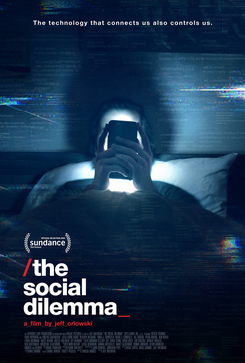
Former engineers and executives from Facebook, Google, Twitter, and Pinterest explain, in their own words, how engagement-driven recommendation systems are built to extract attention and data — often at real cost to users' mental health and to democratic discourse. A widely watched, mainstream-friendly entry point to "if it's free, you are the product."
Review: https://www.rogerebert.com/reviews/the-social-dilemma-movie-review-2020
Stream: https://www.justwatch.com/ca/movie/the-social-dilemma
The Great Hack (2019) — dir. Karim Amer, Jehane Noujaim

Traces the Cambridge Analytica scandal — how a political consultancy harvested Facebook data on tens of millions of people to build psychographic profiles for targeted political advertising around Brexit and the 2016 US election — through data scientist Brittany Kaiser, professor David Carroll's fight to reclaim his own data, and journalist Carole Cadwalladr's reporting.
Review: https://www.rogerebert.com/reviews/the-great-hack-2019
Citizenfour (2014) — dir. Laura Poitras
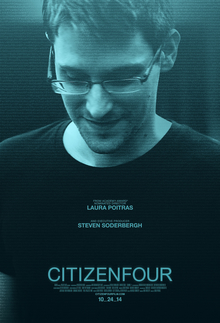
Poitras's own record of the first encrypted contact with Edward Snowden and the Hong Kong hotel meetings where he went public about NSA mass surveillance. Won the Academy Award for Best Documentary Feature and is, for most people, the definitive surveillance documentary.
The Internet's Own Boy: The Story of Aaron Swartz (2014) — dir. Brian Knappenberger

Chronicles Aaron Swartz's life and the aggressive federal prosecution, over downloading academic articles from JSTOR, that preceded his death. A central text on digital rights, information access, and prosecutorial overreach.
Review: https://www.rogerebert.com/reviews/the-internets-own-boy-the-story-of-aaron-swartz-2014
Stream: https://www.justwatch.com/ca/movie/the-internets-own-boy-the-story-of-aaron-swartz
The Secret Trial 5 (2014) — dir. Amar Wala
Follows five Muslim men detained for years under Canada's security-certificate regime, without charge and without full access to the evidence against them. A Canadian civil-liberties case study that belongs on this list on its own merits, not just as a token domestic entry.
Review: https://www.rottentomatoes.com/m/the_secret_trial_5
Stream: https://www.justwatch.com/ca/movie/the-secret-trial-5
Terms and Conditions May Apply (2013) — dir. Cullen Hoback

Examines how tech companies and governments harvest personal data through terms-of-service agreements almost nobody reads. Still holds up as an explainer for how "consent" gets manufactured online.
Review: https://www.rottentomatoes.com/m/terms_and_conditions_may_apply
Stream: https://www.justwatch.com/ca/movie/terms-and-conditions-may-apply
We Are Legion: The Story of the Hacktivists (2012) — dir. Brian Knappenberger

Traces the Anonymous collective's origins and operations. Relevant to digital rights, online civil disobedience, and the politics of anonymity as a tool of dissent rather than only a tool of crime.
Review: https://www.rottentomatoes.com/m/we_are_legion_the_story_of_the_hacktivists
Stream: https://www.justwatch.com/ca/movie/we-are-legion-the-story-of-the-hacktivists
Facebook Follies (2011) — dir. Geoff D'Eon, Jay Dahl
A CBC "Doc Zone" production examining real cases of people whose jobs, marriages, or legal standing were upended by their own Facebook posts, with expert commentary on internet security. Modest production, but a plainly relevant case-study piece for a Canadian audience.
Erasing David (2010) — dir. David Bond

A British filmmaker, alarmed at how much personal data is held on ordinary UK citizens, hires private investigators to hunt him down while he tries to disappear. A concrete, unusually visceral illustration of how much data brokers, credit records, and location tracking already reveal about anyone.
Joseph K. — l'homme numéroté (1990) — dir. Gilles Blais
A Kafka-inspired National Film Board of Canada docufiction on data collection — credit cards, phone records, surveillance cameras — made before social media existed and looking, in hindsight, prophetic rather than dated. Caveat: no mainstream English-language review or streaming/purchase option exists for this one; it's an NFB archival title.
Films and Television
Recent (2020–present)
The Audacity (2026, AMC/AMC+) — creator Jonathan Glatzer [Solove pick]
A Silicon-Valley-meets-Succession satire following a narcissistic tech billionaire building "P.I.N.A.T.A.," a product that charges users for privacy protection while selling everyone else's data. Sharp on the surveillance-as-business-model point: the corruption here is systemic, not one bad executive.
Review: https://teachprivacy.com/the-audacity-big-tech-and-the-battle-for-privacy/
Andor (2022–2025) — creator Tony Gilroy [Solove pick]

A Star Wars prequel series that is, unusually for the franchise, a genuinely serious study of life under an authoritarian surveillance regime — rebels forced into dual lives to evade monitoring, and a portrait (Solove draws the Hannah Arendt comparison explicitly) of how ordinary bureaucratic indifference sustains oppression as much as ideology does.
Review: https://teachprivacy.com/andor-and-authoritarianism/
Brave New World — grouped entry, filed by the 2020 TV adaptation

- TV series (2020, Peacock/NBC) — the most prominent screen adaptation to date. A bioengineered society with no solitude and no real privacy, kept compliant through drugs and enforced transparency rather than force — the useful counterpoint to Orwell's surveillance-by-coercion model.
- Novel (1932) by Aldous Huxley — see Books — Fiction below for the full entry.
Review: https://www.rogerebert.com/streaming/brave-new-world-tv-review-peacock
Stream: https://www.justwatch.com/ca/tv-show/brave-new-world
2010s
The Circle — grouped entry, filed by the 2017 film

- Film (2017), dir. James Ponsoldt, starring Emma Watson and Tom Hanks — an employee at a Google/Facebook-like company is drawn into its "secrets are lies, sharing is caring" ideology of total transparency. Reviews were mixed on execution, but it's a genuinely useful, widely discussed artifact for talking about how surveillance capitalism markets itself.
- Novel (2013) by Dave Eggers — see Books — Fiction below, including its sequel The Every.
Review: https://variety.com/2017/film/reviews/the-circle-review-tom-hanks-emma-watson-1202400029/
Stream: https://www.justwatch.com/ca/movie/the-circle-2016 (JustWatch's own URL slug says "2016"; the page is the 2017 film — noted so it isn't mistaken for a dead link)
Marjorie Prime — grouped entry, filed by the 2017 film; full write-up under Stage and Plays below (the play came first)

- Film (2017), dir. Michael Almereyda, with Jon Hamm and Lois Smith reprising her stage role — a faithful, widely available screen version, useful for readers who can't see a stage production.
Mr. Robot (2015–2019) — creator Sam Esmail [Solove pick]

A socially anxious cybersecurity engineer and vigilante hacker is drawn into an anarchist collective's plan to take on a monopolistic conglomerate. Notable for genuinely accurate hacking (independent security bloggers have confirmed the techniques shown are real) and for treating corporate data control as the actual antagonist.
Ex Machina (2014) — dir. Alex Garland

A young programmer is brought in to administer a Turing test to a humanoid AI, inside an isolated facility riddled with cameras and one-way surveillance. A tight, unsettling look at AI consciousness, manipulation, and the power imbalance between the people who build AI systems and the people (and machines) who live inside them.
The Americans (2013–2018) — creators Joe Weisberg, Joel Fields [Solove pick]

Two KGB illegals pose as an ordinary American married couple during the Cold War. Solove flags it for viewers interested in bugging, wiretapping, and undercover tradecraft — the "clever ploys to gather information and elude security measures" side of the surveillance story, told from the watchers' point of view.
Source (Solove roundup pick, not an individual review): https://teachprivacy.com/5-great-tv-series-about-privacy-and-security/
Her (2013) — dir. Spike Jonze
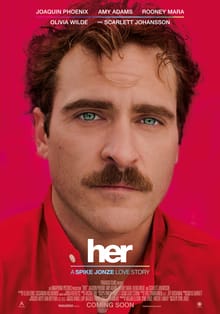
A lonely writer falls for an AI operating system in a near-future Los Angeles. Underneath the romance is a real question about emotional-data intimacy — what it means for something to know you completely — that anticipated today's conversational AI more precisely than most films of its era.
Person of Interest (2011–2016) — creator Jonathan Nolan

A reclusive billionaire programmer and an ex-CIA operative use a mass-surveillance AI that predicts violent crime by monitoring nearly all electronic communication — ostensibly just to stop the crimes it flags. Widely regarded, especially in hindsight, as prescient about the scale of real-world mass surveillance and about the risks of building AI systems with no meaningful oversight.
Critical lens: worth watching with some skepticism rather than taking at face value — the show's moral architecture depends entirely on "the Machine" being run by people with good intentions, which quietly assumes the answer to should this exist at all rather than asking it. That's a common move in surveillance fiction, worth naming rather than just enjoying the thriller.
Review: https://www.rottentomatoes.com/tv/person_of_interest
Stream: https://www.justwatch.com/ca/tv-show/person-of-interest
Black Mirror (2011–present) — creator Charlie Brooker [Solove pick]

An anthology with no continuing cast or setting; each episode imagines a near-future where some familiar technology curdles. Solove calls it essential viewing "for anyone interested in privacy, security, technology, and the future," and singles out "Nosedive" (a social-credit-style rating system governing access to housing, jobs, and relationships) and "Hated in the Nation" (his favourite) as standouts, alongside "The Entire History of You," "Be Right Back," "White Christmas," and "Shut Up and Dance."
2000s
The Last Enemy (2008, BBC miniseries) — dir. Iain B. MacDonald, written by Peter Berry

A mathematician (Benedict Cumberbatch) uncovers a government database quietly merging health, financial, immigration, and biometric records into one system. Engages directly with UK-specific debates over national ID cards and centralized data — a useful counterpoint to the more US-centric titles on this list.
Review: https://www.imdb.com/title/tt0966151/reviews/
Stream: https://www.justwatch.com/ca/tv-show/the-last-enemy
The Lives of Others (Das Leben der Anderen) (2006) — dir. Florian Henckel von Donnersmarck [Solove pick]

A Stasi officer assigned to bug and monitor a playwright's apartment in 1984 East Germany is slowly transformed by what he overhears. Won the Academy Award for Best Foreign Language Film; Solove calls it his favourite of the surveillance films and draws a pointed comparison to interrogation practices under the Bush administration — this is not a period piece kept safely in the past.
Review: https://teachprivacy.com/the-lives-of-others/
Stream: https://www.justwatch.com/ca/movie/the-lives-of-others
V for Vendetta (2005) — dir. James McTeigue, screenplay by the Wachowskis, based on Alan Moore and David Lloyd's graphic novel
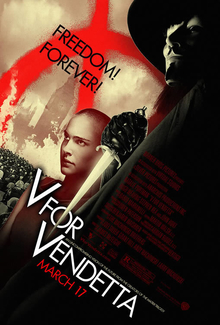
A masked vigilante wages war on a totalitarian, surveillance-saturated near-future Britain. The Guy Fawkes mask went on to become a real-world protest symbol, adopted by Anonymous and used well beyond the film's own politics.
Review: https://www.rogerebert.com/reviews/v-for-vendetta-2006
The Wire (2002–2008) — creator David Simon [Solove pick]

Baltimore crime drama in which wiretaps and pen registers are a central, procedurally accurate plot mechanic — Solove notes David Simon was reportedly asked by law enforcement not to reveal certain real surveillance vulnerabilities the show depicted.
Critical lens: the same procedural accuracy that makes this compelling television also does some quiet legitimizing work — it shows a wiretap obtained through due process, used narrowly, against people the story has already established are guilty. That's a genuine and useful depiction of how the process is supposed to work, but it says nothing about how the same tools get used once you're outside a tightly written narrative with a warrant and a judge already satisfied. Worth holding those two things separately.
Source (Solove roundup pick, not an individual review): https://teachprivacy.com/5-great-tv-series-about-privacy-and-security/
Changing Lanes (2002) — dir. Roger Michell

A minor car accident between a lawyer and an insurance salesman escalates into each side weaponizing their institutional access to financial and legal records against the other. A less obvious entry, but a sharp illustration of how unevenly data access is distributed by class and profession.
Review: https://www.rogerebert.com/reviews/changing-lanes-2002
Minority Report (2002) — dir. Steven Spielberg
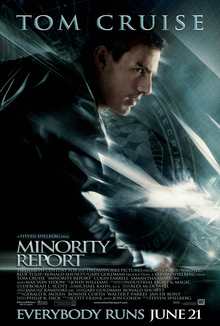
Set in a future where police arrest people before they offend, using precognition alongside pervasive biometric ID and targeted advertising. A touchstone reference for real-world debates over predictive policing and biometric surveillance, and for what happens once that kind of data gets compromised or repurposed.
Review: https://www.rogerebert.com/reviews/minority-report-2002
1990s
The Sopranos (1999–2007) — creator David Chase [Solove pick]

Not primarily a surveillance show, but Solove flags one standout episode for realistically depicting the FBI obtaining a warrant and installing a listening device in Tony Soprano's home, including minimization procedures — a rare, accurate TV depiction of how an electronic-surveillance warrant actually works in practice.
Source (Solove roundup pick, not an individual review): https://teachprivacy.com/5-great-tv-series-about-privacy-and-security/
Enemy of the State (1998) — dir. Tony Scott [Solove pick]

A lawyer is hunted by a rogue NSA official using satellite imagery, phone taps, and every surveillance capability available. Frequently cited — including by real intelligence officials, after the Snowden disclosures — as more prescient than exaggerated.
Critical lens: the film's rogue-official framing lets the NSA as an institution off comparatively easy — the problem is a bad actor abusing the system, not the system's existence or scale. Worth pairing with something like Citizenfour or No Place to Hide, which make the opposite argument: that the capability itself, not just who's holding it, is the problem.
Cross-reference: Gene Hackman's character, Brill, is widely understood as a continuation of — or at least a deliberate echo of — Harry Caul, the character he played in The Conversation twenty-four years earlier (below).
Review: https://www.rogerebert.com/reviews/enemy-of-the-state-1998
Solove source (roundup pick): https://teachprivacy.com/6-great-films-about-privacy-and-security/
Stream: https://www.justwatch.com/ca/movie/enemy-of-the-state
The Truman Show (1998) — dir. Peter Weir [Solove pick]
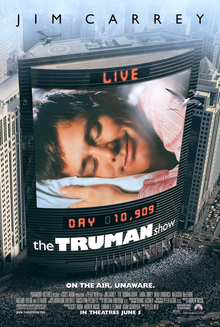
A man doesn't know his entire life has been broadcast, since birth, on hidden cameras for a worldwide audience. Solove uses it to talk about "reality TV run amok" — a prophetic parable about consent, constant observation, and the gap between what's watched and what's actually known.
Source (Solove roundup pick, not an individual review): https://teachprivacy.com/6-great-films-about-privacy-and-security/
Gattaca (1997) — dir. Andrew Niccol [Solove pick]
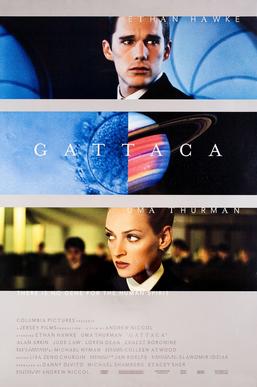
In a future where genetic profiling determines opportunity, a "natural-born" man competes in a genetically engineered society. Solove cites it for the stakes of genetic privacy specifically — what happens once genetic data is used to sort people, and how quickly that forecloses freedom rather than expanding it.
Source (Solove roundup pick, not an individual review): https://teachprivacy.com/6-great-films-about-privacy-and-security/
The Net (1995) — dir. Irwin Winkler
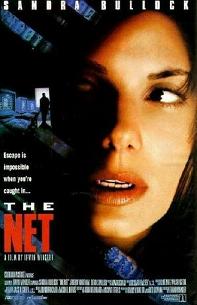
A computer analyst has her identity erased and reassigned after stumbling onto a conspiracy. Dated in its tech, but an early and still-useful mainstream depiction of just how contingent digital identity is on databases you don't control.
Sneakers (1992) — dir. Phil Alden Robinson

A team of security professionals — penetration testers before the term existed — is coerced by government agents into stealing a universal code-breaking device. Prescient on cryptography, backdoors, and what's now called the "crypto wars."
1980s and earlier
The Prisoner (1967–1968) — creator Patrick McGoohan

A cult British series about a former intelligence agent held in a surveillance-saturated village where residents are known only by number and constant escape attempts are constantly, cheerfully thwarted. Solove ranks it among the most memorable screen dystopias, alongside Orwell, Kafka, and Huxley.
Source (Solove roundup pick, not an individual review): https://teachprivacy.com/5-great-tv-series-about-privacy-and-security/
Nineteen Eighty-Four (1984 film) — dir. Michael Radford, with John Hurt and Richard Burton

The most acclaimed screen adaptation of Orwell's novel (an earlier, less notable 1956 British version also exists). The full grouped entry — including the novel and the 2013 stage adaptation — is under Books — Fiction below.
The Conversation (1974) — dir. Francis Ford Coppola
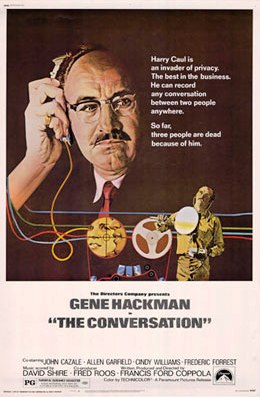
A surveillance expert, hired to record a couple's conversation, is consumed by guilt and paranoia and ultimately undone by being watched himself. Released the same year Watergate broke; still the foundational film about the psychological cost of doing surveillance work, not just having it done to you.
Cross-reference: see the note under Enemy of the State (1998) above on Gene Hackman's character there echoing Harry Caul.
Review: https://www.rogerebert.com/reviews/great-movie-the-conversation-1974
Rear Window (1954) — dir. Alfred Hitchcock

A photographer laid up with a broken leg watches his neighbours and comes to believe he's witnessed a murder. The foundational text on voyeurism and the ethics of watching someone without their consent — everything since, including most of this list, is in conversation with it.
Review: https://www.rogerebert.com/reviews/great-movie-rear-window-1954
Stream: https://www.justwatch.com/ca/movie/alfred-hitchcocks-rear-window
Books — Non-fiction
Recent (2020–present)
The Reverse Centaur's Guide to Life After AI: How to Think About Artificial Intelligence—Before It's Too Late (2026) — Cory Doctorow

Argues AI hype is overblown and reframes the debate around power rather than capability: "centaurs" choose to work with AI, "reverse centaurs" are forced to serve it — an antitrust lens on who benefits from the AI build-out and who doesn't.
Source (Solove roundup pick, not an individual review): https://danielsolove.substack.com/p/privacy-ai-and-tech-works-worth-your-09d
Buy: https://www.amazon.ca/Reverse-Centaurs-Guide-After-Intelligence_Before/dp/037462156X · Publisher: https://us.macmillan.com/books/9780374621568/thereversecentaursguidetolifeafterai/
Enshittification: Why Everything Suddenly Got Worse and What to Do About It (2025) — Cory Doctorow

Names and diagnoses the platform-decay cycle — good to users, then to business customers, then extractive to everyone — tracing the cause to monopoly power, weak regulation, and the loss of interoperability and worker/user leverage.
Buy: https://www.amazon.ca/Enshittification-Everything-Suddenly-Worse-About/dp/0374619328 · Publisher: https://us.macmillan.com/books/9780374619329/enshittification/
Breached! Why Data Security Law Fails and How to Improve It (2022) — Daniel J. Solove and Woodrow Hartzog

Argues that data breaches happen mainly because of ordinary human fallibility, not just technical failure, and proposes concrete reforms to data-security law.
Source (Solove roundup pick, not an individual review): https://teachprivacy.com/notable-privacy-and-security-books-2022/
Buy: https://www.amazon.ca/Breached-Daniel-J-Solove/dp/0190940557 · Publisher: https://global.oup.com/academic/product/breached-9780190940553
The Fight for Privacy: Protecting Dignity, Identity, and Love in the Digital Age (2022) — Danielle Keats Citron

Uses vivid, real cases — many involving harm to women specifically — to show how digital technologies erode privacy, while making a careful case for balancing privacy against free expression rather than treating them as simple opposites.
Source (Solove roundup pick, not an individual review): https://teachprivacy.com/notable-privacy-and-security-books-2022/
Buy: https://www.amazon.ca/Fight-Privacy-Protecting-Dignity-Identity/dp/1324066091 · Publisher: https://wwnorton.com/books/9780393882315
Spies, Lies, and Algorithms: The History and Future of American Intelligence (2022) — Amy B. Zegart
A history of US intelligence agencies that gives the context needed to understand what national-security surveillance actually looks like in a digital, algorithm-driven era.
Source (Solove roundup pick, not an individual review): https://teachprivacy.com/notable-privacy-and-security-books-2022/
Surveillance State: Inside China's Quest to Launch a New Era of Social Control (2022) — Josh Chin and Liza Lin
An investigative account arguing that algorithmic mass surveillance in China isn't a future scenario — it's already present-day reality, with implications for how surveillance technology spreads globally.
Source (Solove roundup pick, not an individual review): https://teachprivacy.com/notable-privacy-and-security-books-2022/
The Listeners: A History of Wiretapping in the United States (2022) — Brian Hochman
Traces US wiretapping from the Civil War through the War on Terror, including how racial backlash politics helped normalize government eavesdropping — a useful historical corrective to the idea that mass surveillance is a purely digital-era problem.
Source (Solove roundup pick, not an individual review): https://teachprivacy.com/notable-privacy-and-security-books-2022/
Atlas of AI (2021) — Kate Crawford

Traces the material reality underneath AI systems — mineral extraction, exploited labour, planetary resource costs — hidden beneath abstractions like "the cloud" and "artificial intelligence." A widely cited corrective to hype-driven AI narratives.
Review: https://www.technologyreview.com/2021/04/23/1023549/kate-crawford-atlas-of-ai-review/
Buy: https://www.amazon.ca/Atlas-AI-Kate-Crawford/dp/0300209576
Life After Privacy: Reclaiming Democracy in a Surveillance Society (2020) — Firmin DeBrabander

Argues that privacy, as traditionally understood, is already gone, and asks what democracy can still mean once it is — pushing past "how do we get privacy back" into "what do we build instead."
Review: https://www.kirkusreviews.com/book-reviews/firmin-debrabander/life-after-privacy/
Buy: https://www.amazon.ca/dp/1108455073 (ISBN-matched; domain-swapped, not independently re-verified)
2010s
The Age of Surveillance Capitalism (2019) — Shoshana Zuboff

Zuboff's landmark account of how Google, Facebook, and similar firms turn human experience into raw material for prediction products sold to advertisers, coining "surveillance capitalism" as a distinct economic logic from industrial capitalism. Probably the single most-cited book in this entire list.
Review: https://www.theguardian.com/books/2019/feb/02/age-of-surveillance-capitalism-shoshana-zuboff-review
Buy: https://www.amazon.ca/Age-Surveillance-Capitalism-Frontier-Power/dp/1610395697
Ghost Work (2019) — Mary L. Gray and Siddharth Suri

Based on years of fieldwork, exposes the vast, hidden human workforce — content moderators, data labellers, gig workers — that makes "automated" AI systems function at all, and argues for labour protections for that invisible workforce.
Review: https://www.kirkusreviews.com/book-reviews/mary-l-gray/ghost-work/
Buy: https://www.amazon.ca/Ghost-Work-Silicon-Building-Underclass/dp/1328566242
Permanent Record (2019) — Edward Snowden

Snowden's own memoir, tracing his path from young intelligence contractor to NSA whistleblower and laying out his own reasoning for going public. The primary-source counterpart to Greenwald's book below.
Review: https://www.nybooks.com/articles/2019/10/24/edward-snowden-labyrinth/
Buy: https://www.amazon.ca/Permanent-Record-Edward-Snowden/dp/1250237238
Automating Inequality (2018) — Virginia Eubanks

Investigates automated eligibility systems and predictive-risk models used in welfare, housing, and child-protective services, showing how they disproportionately surveil and punish poor people. A crucial bridge between AI ethics and material, economic harm.
Review: https://www.nytimes.com/2018/05/04/books/review/automating-inequality-virginia-eubanks.html
Buy: https://www.amazon.ca/Automating-Inequality-High-Tech-Profile-Police/dp/1250074312
The Known Citizen: A History of Privacy in Modern America (2018) — Sarah E. Igo

A sweeping historical account of how Americans have debated and defined privacy from the late 19th century through the digital age. Winner of the Merle Curti Award and a Washington Post Book of the Year — the best long-view historical companion on this list.
Buy: https://www.amazon.ca/Known-Citizen-History-Privacy-Modern/dp/0674244795
Privacy's Blueprint (2018) — Woodrow Hartzog

Argues that privacy law has failed because it regulates data use after the fact rather than the design of the technology itself, and makes the case for "privacy by design" as a legal requirement, not just an engineering ideal.
Review: https://iapp.org/news/a/book-review-privacys-blueprint-the-battle-to-control-the-design-of-new-technologies (trade-press review; no mainstream outlet review confirmed yet)
Buy: https://www.amazon.ca/Privacys-Blueprint-Battle-Control-Technologies/dp/0674976000
Weapons of Math Destruction (2016) — Cathy O'Neil

A mathematician-turned-data-scientist shows how opaque, unregulated algorithms used in hiring, credit, and policing systematically harm the poor while presenting themselves as neutral. Written for a general audience, and still one of the clearest entry points into algorithmic accountability.
Buy: https://www.amazon.ca/Weapons-Math-Destruction-Increases-Inequality/dp/0553418815
Data and Goliath (2015) — Bruce Schneier

Security technologist Schneier lays out, in practical detail, how mass data collection by governments and corporations actually works, why it threatens both security and freedom, and what policy and technical changes could rein it in.
Review: https://www.kirkusreviews.com/book-reviews/bruce-schneier/data-and-goliath/
Buy: https://www.amazon.ca/Data-Goliath-Battles-Collect-Control/dp/039335217X
No Place to Hide (2014) — Glenn Greenwald

Greenwald's first-person account of receiving and reporting the Snowden leaks, pairing reportage on the mass-surveillance programs with an argument about press freedom and government secrecy — a defining document of the Snowden era.
Review: https://www.nytimes.com/2014/05/13/books/no-place-to-hide-by-glenn-greenwald.html
Buy: https://www.amazon.ca/No-Place-Hide-Snowden-Surveillance/dp/1250062586
Dragnet Nation (2014) — Julia Angwin

Investigative journalist Angwin spends a year trying to escape commercial and government tracking, testing tools and legal protections along the way and documenting just how hard genuine privacy has become. A useful, practical companion to the more theoretical titles here.
Review: https://www.kirkusreviews.com/book-reviews/julia-angwin/dragnet-nation/
Buy: https://www.amazon.ca/Dragnet-Nation-Security-Relentless-Surveillance/dp/0805098070
The Filter Bubble (2011) — Eli Pariser

Coined the term "filter bubble" to describe how personalized algorithms on Google and Facebook narrow what information people see, with consequences for democracy and civic life. Early and influential; anticipated today's debates over algorithmic curation and misinformation.
Review: https://www.washingtonpost.com/blogs/blogpost/post/eli-pariser-and-the-threat-of-the-filter-bubbles/2011/05/16/AFkJj74G_blog.html (short WaPo blog commentary — weaker sourcing than a full book review)
Buy: https://www.amazon.ca/Filter-Bubble-What-Internet-Hiding/dp/0143121236
Nothing to Hide: The False Tradeoff Between Privacy and Security (2011) — Daniel J. Solove

Dismantles the "if you've got nothing to hide, you've got nothing to fear" argument by showing what privacy actually protects against. A clear, accessible starting point into privacy law and theory from one of the field's most prominent scholars.
Review: https://repository.law.umich.edu/mlr/vol111/iss6/10/ (academic law-journal review; no mainstream press review confirmed yet)
Buy: https://www.amazon.ca/Nothing-Hide-False-Tradeoff-Security/dp/0300172311
Books — Fiction
Cover images use the same Open Library convention as the non-fiction section above.
Klara and the Sun (2021) — Kazuo Ishiguro

Narrated by Klara, an "Artificial Friend" purchased to accompany a chronically ill teenager, the novel explores AI companionship, observation, and what it means to be cared for — and to care — from inside a machine that is itself constantly watching and learning. A literary, humane entry point into AI-ethics questions, without needing to be read as science fiction first.
Buy: https://www.amazon.ca/Klara-Sun-novel-Kazuo-Ishiguro/dp/059331817X
The Every (2021) — Dave Eggers

Cross-reference: a direct sequel to The Circle (below), following the aftermath of that novel's tech monopoly merging with an e-commerce giant. A former forest-preserve worker infiltrates the combined company intending to destroy it from within, only to find her deliberately extreme anti-privacy proposals eagerly adopted by users anyway — a sharper, more cynical satire than its predecessor about consumer complicity in the death of privacy.
Review: https://www.washingtonpost.com/entertainment/books/dave-eggers-every-book/2021/10/18/fc023ba4-300d-11ec-9241-aad8e48f01ff_story.html · also https://www.kirkusreviews.com/book-reviews/dave-eggers/the-every/
Buy: https://www.amazon.ca/Every-novel-Dave-Eggers/dp/0593315340
Brave New World — grouped entry, filed by the 2020 TV adaptation (see Films and Television, Recent)

- Novel (1932) by Aldous Huxley — a genetically engineered, pleasure-medicated society kept docile through the drug soma and constant, low-friction social conformity rather than fear. Control through engineered contentment rather than coercion — the standard counterpoint to Orwell's model, and arguably the more relevant one to a surveillance-capitalism-era reader, where the mechanism of control is often pleasant rather than punitive.
Buy: https://www.amazon.ca/Brave-New-World-Aldous-Huxley/dp/0060850523
Machines Like Me (2019) — Ian McEwan

Set in an alternate-history 1980s Britain, follows a man who buys one of the first synthetic humans and finds the AI's rigid moral logic upending his relationships and forcing hard questions about machine ethics, consent, and autonomy.
Review: https://www.npr.org/2019/04/23/714887136/in-mcewans-latest-the-machine-is-too-much-like-you
Buy: https://www.amazon.ca/Machines-Like-Me-Ian-McEwan/dp/0525567038
The Circle — grouped entry, filed by the 2017 film (see Films and Television, 2010s)

- Novel (2013) by Dave Eggers — a young employee joins a powerful tech company that pushes "radical transparency," wearable cameras, and a single unified online identity, gradually normalizing total surveillance as a social good rather than a threat. Arguably the most direct fictional treatment of surveillance capitalism and data monopolies on this whole list.
- Cross-reference: followed by the sequel The Every (2021), above.
Review: Margaret Atwood, "When Privacy Is Theft," New York Review of Books — https://www.nybooks.com/articles/2013/11/21/eggers-circle-when-privacy-is-theft/
Buy: https://www.amazon.ca/Circle-Dave-Eggers/dp/0385351399
Nineteen Eighty-Four — grouped entry, filed by the 2013 stage adaptation (see Stage and Plays)

- Novel (1949) by George Orwell — in a totalitarian state ruled by the Party and its figurehead, Big Brother, one man's small acts of independent thought are tracked by telescreens and the Thought Police. The foundational text for discussing mass surveillance and the erosion of privacy and dissent — still cited constantly in real-world debates over CCTV, the NSA, and predictive policing.
- Film (1984), dir. Michael Radford — see Films and Television, 1980s and earlier.
- Stage adaptation (2013), by Robert Icke and Duncan Macmillan — see Stage and Plays for the full write-up.
Buy: https://www.amazon.ca/1984-Signet-Classics-George-Orwell/dp/0451524934
Super Sad True Love Story (2010) — Gary Shteyngart

A satirical near-future love story set in a decaying, hyper-surveilled America where everyone wears devices broadcasting their credit scores and social-desirability ratings to everyone nearby. A sharp satire of data-driven social scoring, years before "social credit" was a familiar phrase.
Review: https://www.npr.org/2010/07/28/128797767/super-sad-and-satiric-two-stories-of-doomed-love
Buy: https://www.amazon.ca/Super-Sad-True-Love-Story/dp/0812977866
Little Brother (2008) — Cory Doctorow

After a terrorist attack on San Francisco, a teenage hacker is detained and interrogated by the Department of Homeland Security, then leads a youth resistance using cryptography, anonymity tools, and hacked tech against a surveillance state built in the name of security. Widely used in digital-rights and privacy-education settings for its concrete, accurate treatment of encryption and civil liberties — and genuinely fun to read, not just instructive.
Review: https://strangehorizons.com/non-fiction/reviews/little-brother-by-cory-doctorow/
Buy: https://www.amazon.ca/Little-Brother-Cory-Doctorow/dp/0765323117
Free (Creative Commons Attribution-Noncommercial-ShareAlike, per Doctorow's own preference): https://craphound.com/littlebrother/download/
Feed (2002) — M.T. Anderson

In a consumerist future, most people have a "feed" implanted in their brain from birth, delivering constant advertising and tracked entertainment. A prescient satire of targeted advertising and algorithmic manipulation of attention, aimed at a YA audience but sharp enough for anyone.
Review: https://www.kirkusreviews.com/book-reviews/mt-anderson/feed/
The Handmaid's Tale (1985) — Margaret Atwood

In the theocratic Republic of Gilead, fertile women are stripped of legal identity and autonomy and kept under constant watch by the state and its enforcers. Primarily about gender and totalitarianism, but it's also a canonical text on state control of the body and the abolition of private life — regularly invoked in digital-rights and reproductive-privacy discussions.
Review: https://www.kirkusreviews.com/book-reviews/margaret-atwood/handmaids-tale/
Buy: https://www.amazon.ca/Handmaids-Tale-Margaret-Atwood/dp/0771008795
Neuromancer (1984) — William Gibson
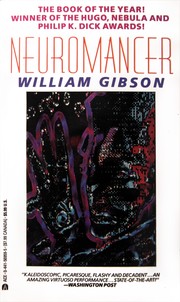
A burned-out hacker is recruited for a cyberspace heist involving a powerful AI trying to break free of the corporate restrictions placed on it, in a noir future run by mega-corporations. Coined "cyberspace" and founded the cyberpunk genre; still the reference point for fiction about corporate data control and AI autonomy.
Review: https://bookmarks.reviews/william-gibsons-neuromancer-at-35/
Buy: https://www.amazon.ca/Neuromancer-William-Gibson/dp/0441569595
Fahrenheit 451 (1953) — Ray Bradbury

A fireman whose job is to burn books, in a future where independent thought is suppressed by wall-sized interactive television and passive entertainment, begins secretly reading and questioning the world around him. Its themes of information suppression and state monitoring of thought remain central to digital-rights and censorship debates.
Review: https://www.kirkusreviews.com/news-and-features/articles/appreciations-fahrenheit-451/ (Kirkus retrospective appreciation, not an original 1953 review — the book predates Kirkus's online review archive)
Buy: https://www.amazon.ca/Fahrenheit-451-Ray-Bradbury/dp/1451673319
We (1924) — Yevgeny Zamyatin

In the glass-walled, numbered-citizen "One State," a man begins keeping a forbidden diary as he awakens to his own individuality in a society where privacy has been abolished by architecture itself — transparent buildings, scheduled "Personal Hours," constant observation. Written before, and a direct influence on, both 1984 and Brave New World — genuinely the origin point of this entire genre.
Review: George Orwell, "Freedom and Happiness," Tribune, 1946 — https://www.orwellfoundation.com/the-orwell-foundation/orwell/essays-and-other-works/freedom-and-happiness-review-of-we-by-yevgeny-zamyatin/
Buy: https://www.amazon.ca/We-Yevgeny-Zamyatin/dp/0140185852
Stage and Plays
No images in this section — plays don't have a poster/cover convention comparable to film or print, and a single production-specific promotional photo would misrepresent the other stagings of the same script (per the earlier discussion about this section).
Data (2024, Arena Stage, Washington DC; Off-Broadway transfer to the Lucille Lortel Theatre, 2026) — Matthew Libby
A recent college graduate at a fictional tech company is recruited into its data-science division after building an algorithm that predicts rare events — and confronts a government project repurposing the technology for immigration enforcement. Explicitly critiques public-private surveillance partnerships (the resemblance to real companies like Palantir is not subtle) and the ethics of reducing people to data points. Very recent — no published script or filmed version yet exists, worth revisiting once one does.
Review: https://www.newyorktheatreguide.com/reviews/data-off-broadway-review · also https://mdtheatreguide.com/2024/11/theatre-review-data-at-arena-stage/
Marjorie Prime — grouped entry, filed by the 2017 film (see Films and Television, 2010s)
- Play (2014), by Jordan Harrison — premiered at the Mark Taper Forum, Off-Broadway at Playwrights Horizons in 2015 (Pulitzer Prize finalist), Broadway revival December 2025–February 2026 with June Squibb and Cynthia Nixon. An elderly widow, her memory failing, is given a holographic AI companion modeled on her late husband, built by learning her own memories through conversation. A quiet, elegant meditation on what's lost — or quietly falsified — when memory and identity are handed over to algorithmic reconstruction.
Review: https://newyorktheater.me/2025/12/08/marjorie-prime-broadway-review/ (current Broadway revival) · https://www.newyorktheatreguide.com/reviews/marjorie-prime (original Playwrights Horizons run)
Script: published by Theatre Communications Group; buy at https://www.amazon.ca/Marjorie-Prime-TCG-Jordan-Harrison/dp/1559365242
Privacy (2014, Donmar Warehouse, London; The Public Theater, New York, 2016) — James Graham
A documentary-style, audience-participatory play built directly out of the Snowden revelations about NSA/GCHQ mass surveillance. A playwright character researches how much of his own data is exposed, pulling the audience in with live demonstrations — phones out, personal data displayed on screen — that turn the abstraction of "surveillance" into something concrete and personal. Arguably the single most on-the-nose entry on this whole page for a privacy consultant's own reading list.
Review: https://variety.com/2014/legit/reviews/london-theater-review-privacy-at-the-donmar-warehouse-1201162085/ · also, reviewed from a tech/privacy-industry angle specifically: https://www.theregister.com/2014/05/24/privacy_at_the_donmar_warehouse_theatre_review/
Background: https://en.wikipedia.org/wiki/Privacy_(play)
No published acting edition or filmed/streamed version exists — checked Wikipedia, Nick Hern Books, Concord Theatricals, and doollee.com (a UK playwright bibliographic database, which lists no publisher for this title). Likely explanation: the play was updated with fresh real-time audience data for each production run, which may be why it was never packaged as a standard licensable text.
The Nether (2013, Kirk Douglas Theatre, LA; Off-Broadway at MCC Theater, 2015, with Merritt Wever) — Jennifer Haley
Set in a near-future, fully immersive internet, the play follows a detective investigating a virtual realm built to let users indulge disturbing fantasies with childlike avatars. Interrogates anonymity, identity, and accountability online, and asks whether actions taken in a purely virtual space carry moral weight — a sharp companion piece to real debates about online anonymity, child protection, and the limits of policing virtual spaces. Content note: the play's premise involves depicted child sexual abuse in virtual form; a serious, well-reviewed work, not exploitative, but not a casual pick.
Review: https://variety.com/2015/legit/reviews/the-nether-review-merritt-weaver-1201440863 (MCC/Off-Broadway) · https://variety.com/2013/legit/reviews/legit-review-the-nether-1200328193 (LA premiere)
Script: published as a Concord Theatricals/Samuel French Acting Edition; also in book form via Northwestern University Press — https://nupress.northwestern.edu/9780810130630/the-nether/
Nineteen Eighty-Four (2013 stage adaptation, Robert Icke and Duncan Macmillan) — see the grouped entry under Books — Fiction above for the full write-up alongside the novel and film.
A Number (2002, Royal Court Theatre, London; major revivals 2020 Bridge Theatre, 2022 Old Vic) — Caryl Churchill
A tight, one-hour two-hander in which a father confronts the fact that his son is one of several human clones, some created without his knowledge or consent. Explores identity and consent once biological data can be copied — a foundational piece of "bioethics theatre" that resonates with today's debates over genetic and biometric data collection.
Review: https://www.thestage.co.uk/reviews/a-number-review-at-bridge-theatre-london--caryl-churchills-kaleidoscopic-play-diluted (2020 revival) · https://variety.com/2002/legit/reviews/a-number-2-1200545668/ (2002 original)
Script: https://www.concordtheatricals.co.uk/p/7620/a-number · A 2008 HBO/BBC television film also exists, starring Tom Wilkinson and Rhys Ifans, for readers who'd rather watch than read.
Suggest a title
Know a film, book, show, or play that belongs on this list? Send it along — no account, no third-party form service, just an email straight to John.