Yukon
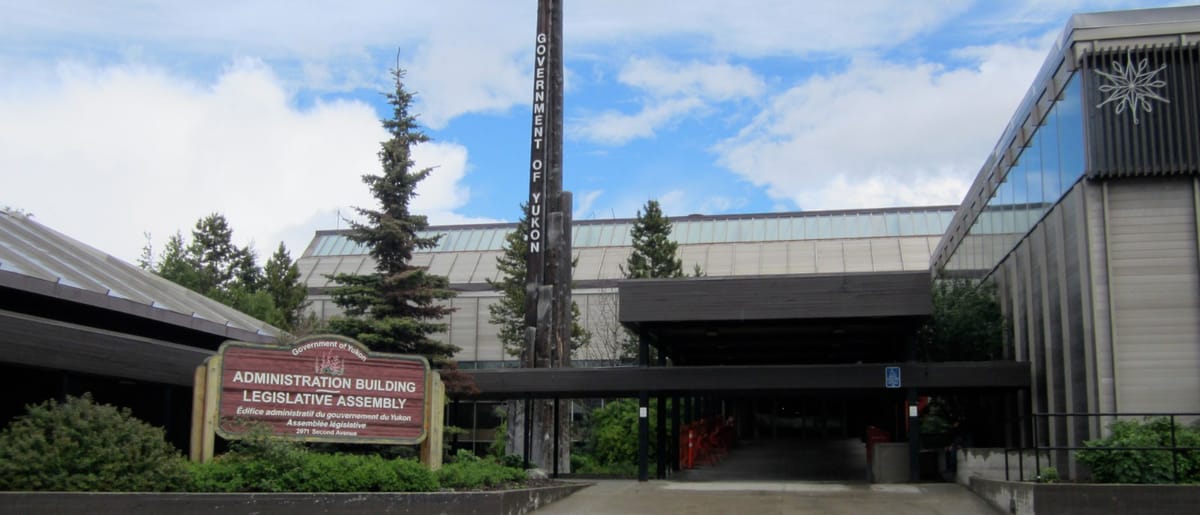
Yukon Ombudsman, Information and Privacy Commissioner, and Public Interest Disclosure Commissioner
Yukon combines all three roles in one office. A single officer of the Legislative Assembly serves as Ombudsman, Information and Privacy Commissioner, and Public Interest Disclosure Commissioner at the same time. On the information and privacy side, the office reviews complaints and oversees access-to-information requests and how public bodies and health custodians handle privacy. In its other roles, it investigates public complaints against Yukon government bodies and takes in whistleblower disclosures.
Laws and regulations administered (information and privacy mandate):
- Access to Information and Protection of Privacy Act (ATIPPA), SY 2018, c.9 — governs how public bodies handle access to records and personal information. This modernized Act has been in force since April 1, 2021.
- Health Information Privacy and Management Act (HIPMA), SY 2013, c.16 — governs personal health information.
The office also administers the Ombudsman Act and the Public Interest Disclosure of Wrongdoing Act under its other two roles.
Other territorial legislation of note
- Traffic Safety Act, SY 2024, c.10, assented October 29, 2024. Section 215, "Facial recognition to verify identity," lets the vehicle registrar make limited use of biometric facial recognition. The then-Commissioner raised scope-creep concerns about the original proposal, and the government responded: it narrowed the bill to registrar identity-verification against existing registry photos, restricted who could use the technology, and added security safeguards. The office endorsed the final version. This is Yukon's only confirmed biometric-technology provision in statute — the territory has no standalone biometrics or digital-ID act.
- The Yukon government's AI-use directive limits public-service staff to approved enterprise AI tools and requires them to comply with ATIPPA and HIPMA. This is administrative policy, not legislation — no dedicated Yukon AI statute exists yet.
Pending and proposed legislation
- No ATIPPA amendment beyond the 2021 modernization is pending or has recently been introduced. But ATIPPA's built-in periodic review clause has kicked in: according to an April 2026 CBC report, Yukon's Information and Privacy Commissioner has already criticized the current Act publicly, ahead of a review reportedly scheduled for 2027. This page could not independently confirm the specific reform proposals. It will be updated once a bill, if any, is tabled.
Gaps: employee privacy and political parties
Employee privacy. Public-sector employees are largely covered: personal information Yukon government departments hold about their own staff falls under ATIPPA the same as anyone else's, as it does in most provinces. Ontario is the notable exception — its FIPPA and MFIPPA (s.65(6) and s.52(3)) exclude labour-relations and employment records from the Acts entirely, which strips even public-sector employees of the privacy protection they'd get elsewhere in Canada.
The real gap is private-sector employees. Yukon has no private-sector privacy statute of its own, so PIPEDA applies by default — but PIPEDA's employee-information provisions only reach employees of federally-regulated employers (banks, telecoms, airlines, and similar). For everyone else, there's no comprehensive statutory protection covering what a private employer can collect, use, or disclose about them. Yukon's Employment Standards Act has nothing addressing this: no requirement to disclose electronic monitoring (unlike Ontario's 2022 ESA amendment), and no rule on workplace surveillance, GPS tracking, or drug and alcohol testing. Absent a Yukon-specific case, the operative framework would be the Supreme Court of Canada's CEP, Local 30 v. Irving Pulp & Paper, 2013 SCC 34, which requires an employer to show an actual, demonstrated safety problem before random drug or alcohol testing is justified.
Political parties. ATIPPA's definition of "public body" doesn't include political parties, so Yukon parties face no statutory privacy obligation for the voter, donor, or membership data they collect. Elections Yukon's own privacy policy covers only its handling of the voter register — not what parties do with that data afterward. BC is the one exception nationally: its Commissioner has asserted jurisdiction over political parties under PIPA, and won when the Liberal, Conservative, and NDP parties challenged that authority in court (Liberal Party of Canada v. The Complainants, 2024 BCSC 814). Yukon's own Commissioner has joined counterparts elsewhere in calling for parties to be brought under privacy law, but no such legislation exists here yet.
Sources
- Yukon Ombudsman, Information and Privacy Commissioner, and Public Interest Disclosure Commissioner — official office homepage.
- Access to Information and Protection of Privacy Act (ATIPPA), SY 2018, c.9 — full text.
- Health Information Privacy and Management Act (HIPMA), SY 2013, c.16 — full text.
- Traffic Safety Act, SY 2024, c.10 — full text; section 215 covers facial recognition to verify identity.
- "Yukon privacy commissioner's concerns about facial recognition lead to proposed Traffic Safety Act changes" — reporting on Commissioner Jason Pedlar's objections and the resulting bill amendments (the original Yukon News URL for this story no longer resolves; this is a syndicated mirror of the same article).
- Learn how the government uses artificial intelligence — Government of Yukon page describing the approved-tools directive.
- "'Absolutely awful': Yukon's access to information law under fire ahead of scheduled review" — CBC News, April 2026.
- Employment Standards Act, RSY 2002, c.72 — full text; reviewed in full and contains no provisions on electronic monitoring, surveillance, or workplace testing.
- CEP, Local 30 v. Irving Pulp & Paper, Ltd., 2013 SCC 34 — the leading national precedent on employee privacy vs. workplace drug/alcohol testing; a New Brunswick case, not a Yukon one, but the operative framework in the absence of Yukon-specific law.
- Elections Yukon privacy policy — governs only Elections Yukon's own handling of the voter register, not parties' subsequent use of that data.
- Liberal Party of Canada v. The Complainants, 2024 BCSC 814 — BC Supreme Court decision confirming BC's PIPA applies to federal political parties' BC operations.
- IPC Ontario, Interpretation Bulletin: Labour Relations or Employment Records — explains the FIPPA s.65(6) / MFIPPA s.52(3) exclusion referenced above as the Ontario exception on public-sector employee privacy.